


Rapid Test for Urinary Tract Infections (UTI)
Price range: 6,90 € through 60,00 €

Rapid Thyroid Function Test (TSH)
Price range: 7,90 € through 66,00 €
Rapid Fecal Occult Blood (FOB) Test
Price range: 6,90 € through 60,00 €
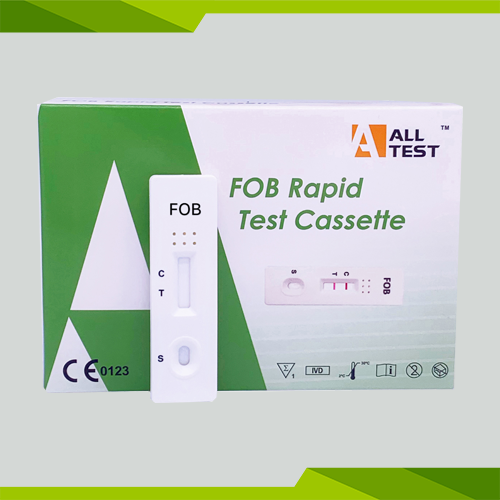
Rapid test for detecting occult blood in stool. Designed for home use, without the need to visit a laboratory.
Kit contents:
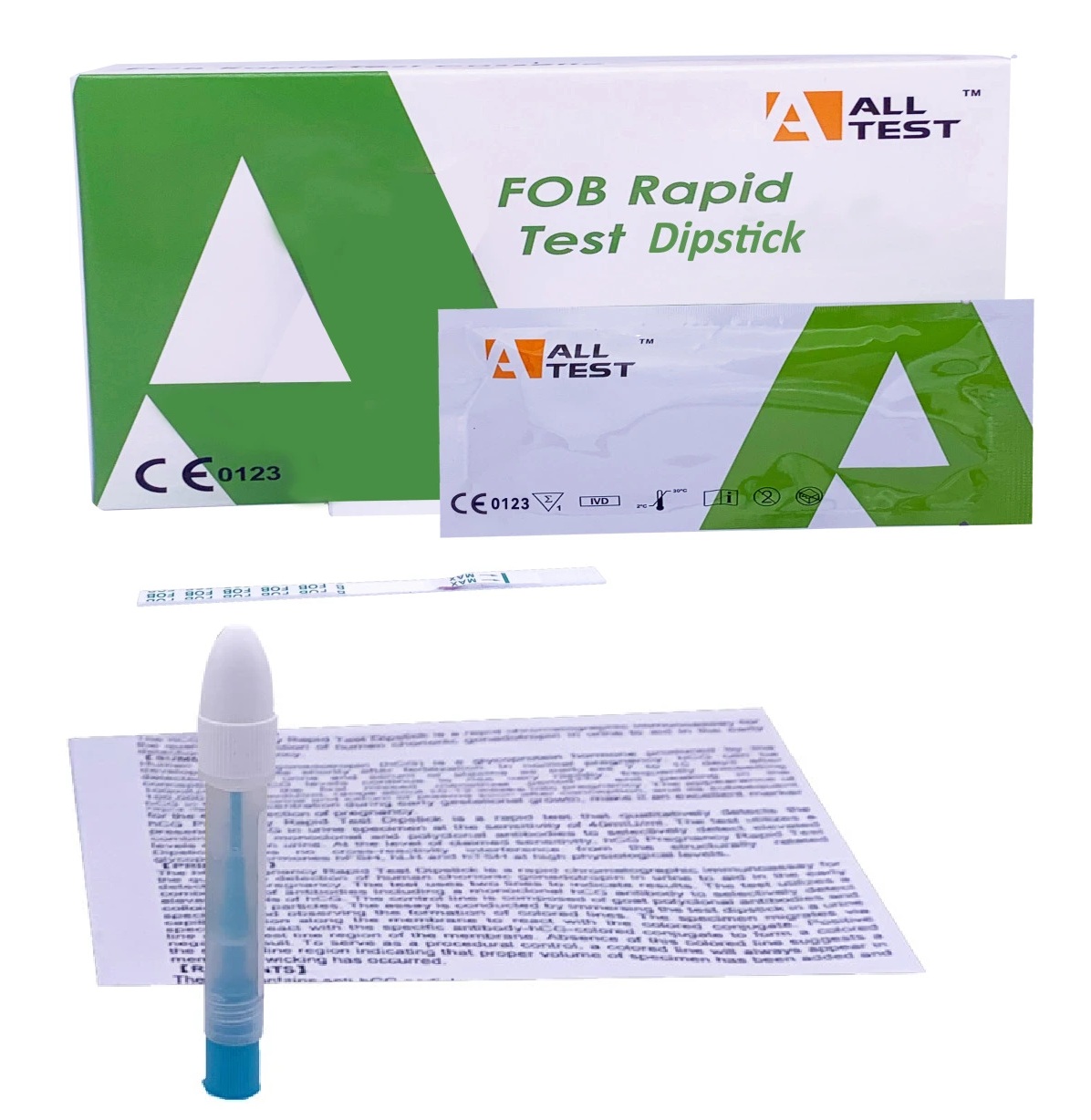
- Test cassette or strip with reaction tube
- Extraction tube with buffer solution and applicator probe
- Instruction leaflet in Bulgarian and English
Description
Rapid test for the qualitative detection of human occult blood in stool (FOB).
INTENDED USE
For the detection of human occult blood in stool.
Method of analysis: chromatographic immunoassay
Useful information about fecal occult blood
What conditions can cause occult bleeding
Blood in the stool is not always caused by a disease. For example, taking nonsteroidal anti-inflammatory drugs (NSAIDs) can also cause blood in the stool.
However, the presence of blood in the stool as detected by clinical laboratory tests can be caused by a number of conditions:
- ulcer
- hemorrhoids—both internal and external
- gastroesophageal reflux
- colon polyps
- Crohn’s disease
- ulcerative colitis
- colon polyps
- colon cancer
Colon cancer is very common. It is the second most common cancer in men, after lung cancer, and the third most common in women, after breast cancer and uterine cancer. It is important to note that the presence of blood in the stool may be the only symptom of this cancer. However, laboratory testing of stool samples is not sufficient to make a diagnosis. In addition to the fecal occult blood test, other tests must also be performed.
Symptoms That Warrant Testing for Blood in the Stool
If you are experiencing abdominal pain or suffering from anemia, a fecal occult blood test is necessary.
In addition, the test is recommended if there is a family history of colorectal cancer. Age is another factor—this test is performed on patients over the age of 50.
Advantages:
- Fast results
- Easy to use at home, no need to visit a lab
- High accuracy and reliability of results
Testing procedure and interpretation of results:
- Allow the package to reach room temperature before opening it.
- The stool sample must be collected using the stool collection pad. It is important that the sample not be collected from a toilet to avoid contamination of the sample with any chemicals or other substances that could lead to a false result.
- Unscrew the test tube cap, then insert the applicator probe into the stool sample at least 3 different places. Do not scoop the stool sample.
- Return the applicator to the test tube, screw the cap on tightly, and then shake vigorously to mix the sample with the extraction buffer.
- Remove the test cassette/strip from the foil packaging immediately before use. Best results will be obtained if the test is performed immediately after opening the package.
- Secure the extraction tube, hold it upright, and snap off the tip.
- For a test cassette: turn the tube upside down and dispense 3–4 drops into the sample area marked with an “S” on the test cassette.

- For the test strip: turn the test tube upside down and dispense 8–10 full drops into the collection tube. Dip the test strip into it, being careful not to submerge it beyond the level marked as MAX

- Start the timer and interpret the result after 5 minutes. Do not interpret the results after more than 10 minutes.
- POSITIVE
Two visible colored lines, C and T, appear. One line appears in the control zone C, and a second one in the test zone T. The lines may vary in intensity—this is normal.
- NEGATIVE
Only one colored line appears in the control zone C. No line appears in the test zone T.
- INVALID
No line appears in the control zone C, even if one appears in the test zone T. Possible causes include an insufficient sample volume or incorrect testing technique. Review the testing procedure and repeat the test with a new test strip.
What is the difference between a cassette and a test strip?
Testing with a cassette is easier to perform.
Original instructions for use and complete technical specifications.
Additional information
| Weight | 0,05 kg |
|---|
Reviews (0)
Only logged in customers who have purchased this product may leave a review.


Reviews
There are no reviews yet.