




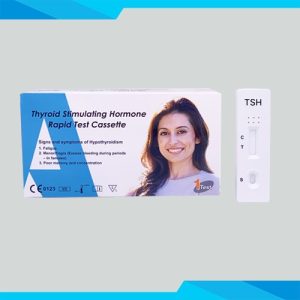
Rapid Thyroid Function Test (TSH)
Price range: 7,90 € through 66,00 €

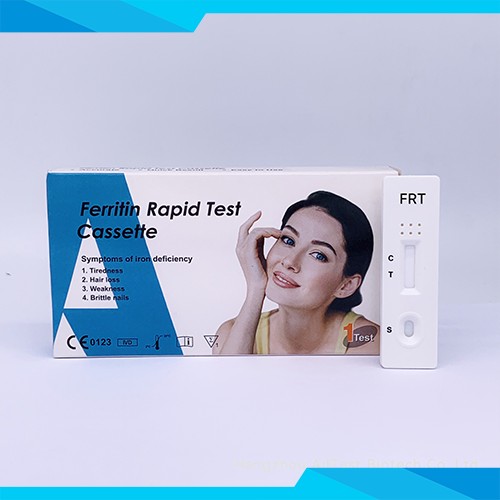
Quick Test for Anemia (Ferritin, FRT)
Price range: 9,80 € through 84,00 €
A quick and convenient at-home test to detect iron deficiency in the body.
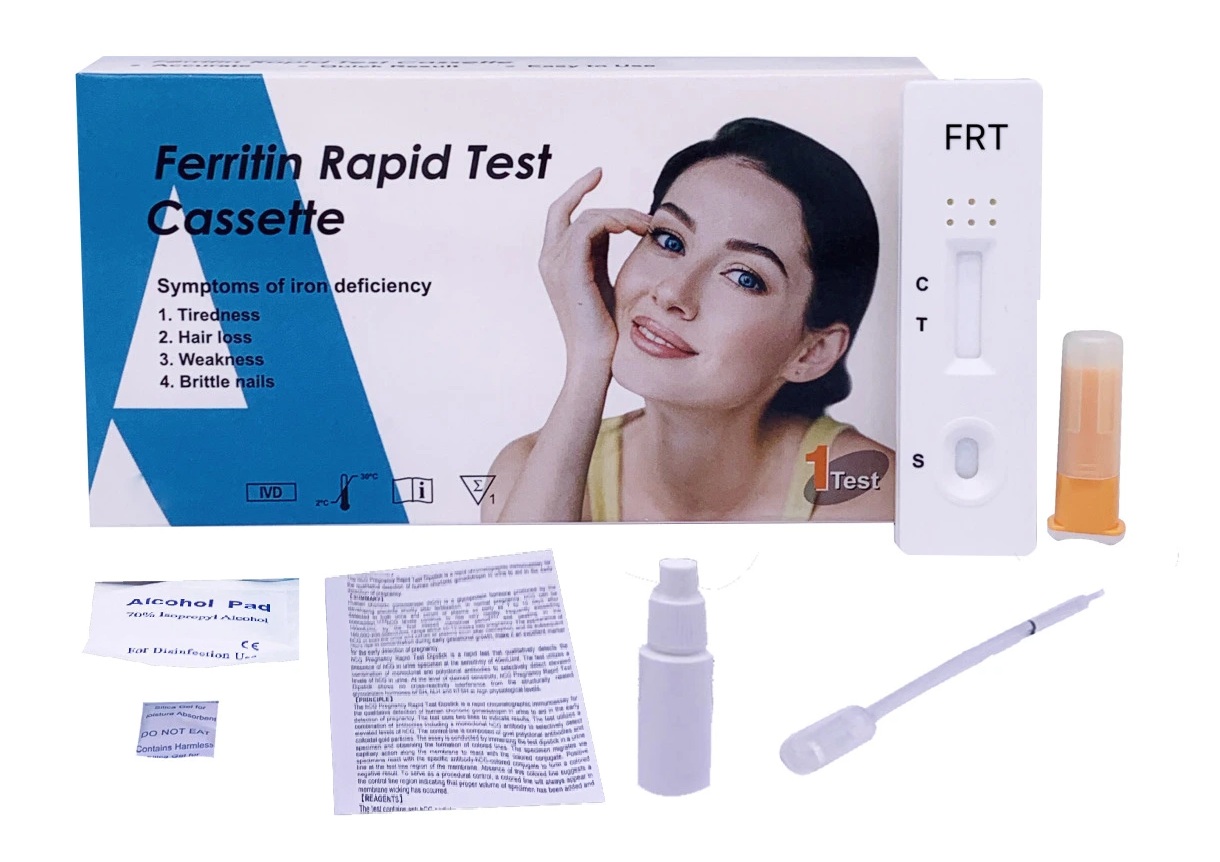
Contents:
- Test cassette
- Capillary dropper
- Buffer solution
- Alcohol swab and automatic lancet
- Instruction leaflet in Bulgarian
Description
For determining insufficient ferritin levels in the body. Low ferritin is a sign of possible iron-deficiency anemia. The rapid ferritin test is based on chromatographic immunoassay. It qualitatively measures ferritin in a capillary blood sample (from a finger).
Intended Use
For at-home ferritin testing.
Additional Information on Ferritin
Anemia caused by iron depletion is widespread among children and women of all ages, but primarily among women who are still menstruating (at least 20% suffer from iron deficiency). Iron deficiency occurs when the blood does not contain enough red blood cells and, consequently, has low levels of hemoglobin, which is the primary protein involved in transporting oxygen throughout the body. Iron is an essential component of hemoglobin.
Iron depletion, which can occur during pregnancy, growth, or in cases of insufficient iron intake, inadequate absorption, or blood loss (menstruation, unusual bleeding, ulcers, etc.), has a significant impact on health.
Low ferritin levels may also indicate hypothyroidism, vitamin C deficiency, or celiac disease. Low ferritin levels are observed in some patients with restless legs syndrome, which is not necessarily related to anemia but may be due to low iron stores unrelated to anemia.
Ferritin is an iron-containing protein. It is normally stored within the body’s cells until the time comes when more red blood cells need to be produced. At that point, the body signals the cells to release ferritin.
When should this test be used?
To check for iron deficiency in the body. Typical symptoms of iron deficiency include:
- pallor,
- fatigue,
- headaches,
- rapid heartbeat or shortness of breath during exercise
- in women who are pregnant or experiencing heavy menstrual bleeding.
The test can be performed at any time of day, but should not be done if you have an illness, acute inflammation, or damage to the spleen or liver.
If you have repeated results showing low ferritin levels, consult a doctor or healthcare professional for further testing, as unusual results can occur even in the absence of iron deficiency.
Advantages:
- At-home testing, no need to visit a lab;
- Quick results;
- Visual interpretation of the result;
- Easy to use
- High accuracy and reliability of the result
- Complete kit with all accessories needed for at-home testing
Testing procedure and result interpretation
Before proceeding with the test, read the storage instructions included with the test and review the procedure card.
Using the test
- Allow the package to reach room temperature before opening it. Remove the test cassette immediately before performing the test.
- Wash your hands with soap and rinse with clean, warm water.
- Carefully twist and pull off the cap of the automatic lancet.
- Use the provided alcohol swab or wipe to clean the tip of your middle or ring finger, where you will prick your finger.
- Press the lancet—on the side where the cap has been removed—against the tip of your finger. The tip retracts automatically after use.
- Hold your hand down, and massage the tip of the finger that was pricked to obtain a drop of blood.
- Without squeezing the droplet chamber, bring it into contact with the blood. The blood flows into the capillary tube through the tube up to the line marked on it.
- Place the collected blood into the sample well on the cassette (marked with an S) by gently squeezing the dropper.
- Wait for the blood to spread completely into the well. Unscrew the cap from the buffer bottle and add 1 drop of buffer to the sample well on the cassette.
- Wait for the color lines to appear. Read the result after 5 minutes. Do not interpret the result after 10 minutes.

Interpreting the Results
 NORMAL LEVEL (>30 ng/mL) – Two visible colored lines appear in the T and C zones. The lines may vary in intensity—this is normal. The ferritin concentration in the blood is normal; there is no potential iron deficiency.
 LOW LEVEL (<30 ng/mL)— only one colored line appears in the control zone C; there is no line in the test zone T. This result means that the ferritin concentration in the blood is too low. You should consult a doctor, as this may be due to iron deficiency
 INVALID: No line is visible in the control zone C (even if a line appears in the test zone T). Possible causes include an insufficient sample volume or incorrect testing technique. Review the testing procedure and repeat the test with a new test strip.
Original instructions for use and complete technical specifications.
Additional information
| Weight | 0,05 kg |
|---|
Reviews (0)
Only logged in customers who have purchased this product may leave a review.



Reviews
There are no reviews yet.