

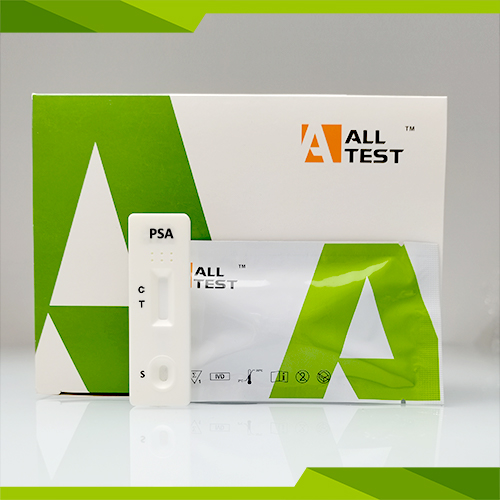
Rapid Prostate-Specific Antigen (PSA) Test, Qualitative
Price range: 4,80 € through 54,00 €
A rapid test for detecting prostate-specific antigen (PSA), suitable for home use. For preliminary diagnosis of elevated PSA levels, which may indicate a potential risk of prostate cancer, benign prostatic hyperplasia, or prostatitis.
Contents:
-
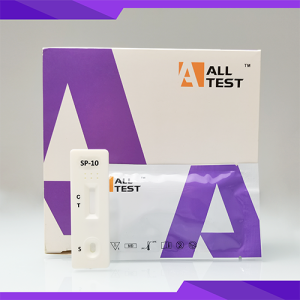
- test cassette with pipette
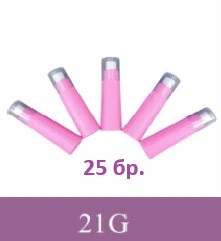
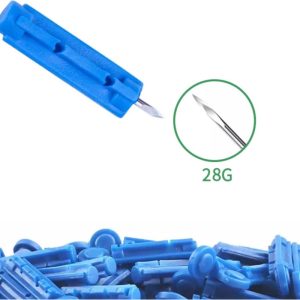
- automatic lancet and disinfectant wipe
- buffer solution
- Testing Instructions
Description
Rapid test for the detection of prostate-specific antigen (PSA) using a capillary blood sample.
INTENDED USE
For the qualitative detection of PSA via chromatographic immunoassay. It is intended for preliminary assessment of the presence and approximate estimation of PSA levels. Qualitative (present/absent) measurement, with a PSA cutoff level of 4 ng/mL:
Additional Information on PSA
Prostate-specific antigen (PSA) is produced by glandular and endothelial cells of the prostate. The serum PSA level in healthy men ranges from 0.1 ng/mL to 2.6 ng/mL. It may be elevated in malignant conditions such as prostate cancer and in benign conditions such as benign prostatic hyperplasia and prostatitis. A PSA level of 3 to 10 ng/mL is considered the “gray zone,” while levels above 10 ng/mL are highly suggestive of cancer. For PSA levels between 3 and 10 ng/mL, specialists recommend further evaluation of the prostate via biopsy. The prostate-specific antigen (PSA) test is the most valuable tool available for diagnosing early-stage prostate cancer. Many studies confirm that PSA is the most useful and significant tumor marker known for prostate cancer and prostate infection in cases of benign prostatic hyperplasia. The rapid PSA test kit yields a positive result when PSA levels exceed 4 ng/mL.
Advantages:
- Easy to use at home, without a visit to a laboratory
- High accuracy and reliability of results
- Fast results
- Kit contains everything needed to perform the test.
Testing procedure and result interpretation:
Preparation
- Allow the test and buffer to reach room temperature (15–30°C) before testing.
- Remove the test cassette from the sealed package and use it as soon as possible.
- Make sure there is no discoloration on the test, reference, and control lines.

- Place the cassette (test strip) on a clean, flat surface.
SAMPLE COLLECTION (finger prick)
Collect a blood sample from any finger by pricking it with the automatic lancing device included in the kit:
- Wash your hands thoroughly and disinfect the finger from which you will draw blood using the wipe included in the kit
- Massage the finger for a few seconds to improve blood flow.
- Use the lancet to prick the skin and wipe away or shake off the first drop of blood.
- Gently rub your hand from the wrist across the palm to the finger to form a new drop of blood.
- Draw a blood sample by touching the tip of the capillary tube to the drop of blood. Fill the tube to about 2 cm from the middle of the pipette. Avoid introducing air bubbles.
- Squeeze the upper, protruding part of the dropper to transfer the entire contents into the sample port on the test cassette, the smaller opening (which may be marked with an “S”) or into the corresponding area on the test strip.
START
The test must be started immediately after adding the blood sample.
- Open the buffer solution container and add 1 drop of it to the sample well—the smaller well on the test cassette (which may be marked with an “S”).

INTERPRETATION
The result should be read after 5 minutes. Do not interpret the result after more than 10 minutes.
- NEGATIVE – a colored line appears only in the control (C) zone. No colored line appears in the test zone (T). This indicates a PSA level below 4 ng/mL.

- POSITIVE –two colored lines appear.
 The intensity of the color in the test line (T) area will vary depending on the concentration of PSA present in the sample. Therefore, any shade of color in the test area (T) should be considered positive.
- INVALID – The control line (C) does not appear.
 Insufficient sample volume or improper procedural techniques are the most likely causes of the absence of a control line.
Original instructions for use and complete technical specifications.
Additional information
| Weight | 0,1 kg |
|---|
Reviews (0)
Only logged in customers who have purchased this product may leave a review.


Reviews
There are no reviews yet.