
Price List for Calibration of Breathalyzers
Prices for Calibrating Breathalyzers
Description
Reliable and accurate measurements with a breathalyzer can only be guaranteed if the device is regularly calibrated and maintained in accordance with the manufacturer’s instructions. Furthermore, the manufacturer’s warranty may not be honored if the intervals for periodic inspection and calibration have not been observed. For breathalyzers intended for personal use, this interval is typically twelve months (once a year), while for those intended for professional use, it is usually six months.
Prices for inspection and calibration of breathalyzers
- Inspection: 0.00 €
- Personal (breathalyzers for personal use): 24.00 €
- Professional (breathalyzers for employee testing): 60.00 €
- Police breathalyzer (certification included): 84.00 €
Why is calibration necessary?
The main reason is that alcohol sensors begin to lose their accuracy over time, even if they are not used very often.
This is due to the measurement technology. Even the electrochemical sensors used in high-quality breathalyzers are subject to what is known as sensor drift over time (a shift in the zero point). Sensor drift is a natural process and is hardly affected by the number of measurements taken; in other words, even if the breathalyzer hasn’t been used for a whole year, due to natural sensor drift, it may no longer provide accurate readings. Calibration corrects this drift and restores the breathalyzer’s accuracy to the maximum measurement deviation (error) guaranteed by the manufacturer.
Before delivery, we perform pre-sale service on every breathalyzer to ensure it is freshly calibrated. A sticker is affixed to the breathalyzer indicating the date of the next calibration. Fresh calibration is important for the reasons mentioned above, so that you can rely on accurate measurements from your breathalyzer for as long as possible.
How often does a breathalyzer need to be calibrated?
The calibration frequency for a given breathalyzer model depends on many factors: intensity of use, sensor wear, method of use, and legal requirements. Theprocess involves testing the operation of all the breathalyzer’s components and functions, measuring and calibrating its accuracy, and subsequently verifying the stability of the results obtained.
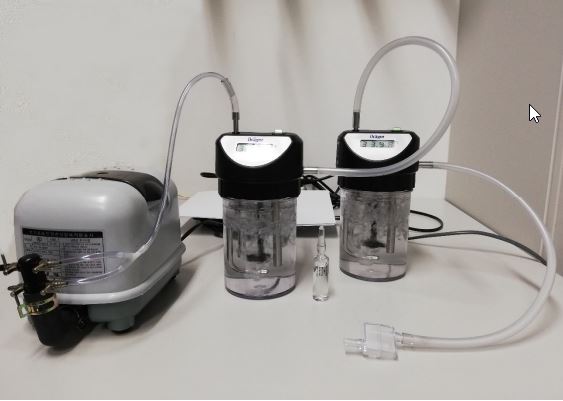
Specialized equipment is used for calibration: simulators, pumps, reference solutions, and the model’s methodology. The process involves testing the device in service mode using reference samples with a known alcohol concentration. As a result, the measuring system’s response to the reference samples with a specific concentration is adjusted.
Depending on the model, calibration must be performed once every 6, 12, or 24 months, in accordance with the manufacturer’s recommendations, the method of use, and in compliance with the following standards:
- BDS|EN 16280 – for general-purpose breath alcohol testing devices,
- BDS|EN 15964—for breathalyzers intended for employee testing,
- Requirements of the Law on Measuring Instruments—for devices registered as such (in Bulgaria—Alcotest 7510).
When may an emergency calibration be required?
Professional-grade breathalyzers have built-in diagnostic tools that detect operational anomalies. When such anomalies are detected, the breathalyzer will alert the user that it needs to be calibrated, even if the next scheduled calibration date has not yet passed. What is the reason for this?
Most often, it is due to improper use of the breathalyzer. A good example of improper use is testing with residual alcohol in the mouth, most commonly immediately after consuming alcohol. In such cases, the alcohol concentration is very high and can decalibrate the sensor. Furthermore, testing with concentrated alcohol leads to accelerated wear and tear and can even cause the sensor to malfunction.
Therefore, it is important to follow the breathalyzer’s instructions for use and not to use it immediately after consuming alcohol. Even small amounts of residual alcohol in the mouth can cause inaccurate readings because they are highly concentrated. You might be surprised, but even some prepared foods contain alcohol and can lead to false results if consumed immediately before testing. For example, a well-known brand of chocolate-filled croissants contains alcohol in the filling, which is enough to skew the test result. Another well-known example is alcohol-containing mouthwash. These can seriously affect the test result and even shorten the sensor’s lifespan if you test immediately after rinsing your mouth.
Always follow the instructions for use of your breathalyzer and wait 15 minutes after consuming food or drink before taking a test.
Other Factors Affecting Breathalyzer Accuracy
You might be surprised, but the result can be affected by body temperature and breathing rate. A body temperature just 1 degree Celsius higher leads to a 7% increase in the test result. Breathing rate can lead to opposite results. For example, a person who has been engaging in physical activity that causes rapid and deep breathing may have a lower result compared to someone who has not been physically active. Similarly, exposure of the breathalyzer to an environment containing certain chemicals—such as oil-based paints, solvents, gasoline, celluloid, cigarette smoke, and others—can affect the accuracy of the readings.
Reviews (0)
Only logged in customers who have purchased this product may leave a review.


Reviews
There are no reviews yet.